Neville Chamberlain Did the Wrong Thing
NEVILLE CHAMBERLAIN DID THE WRONG THING
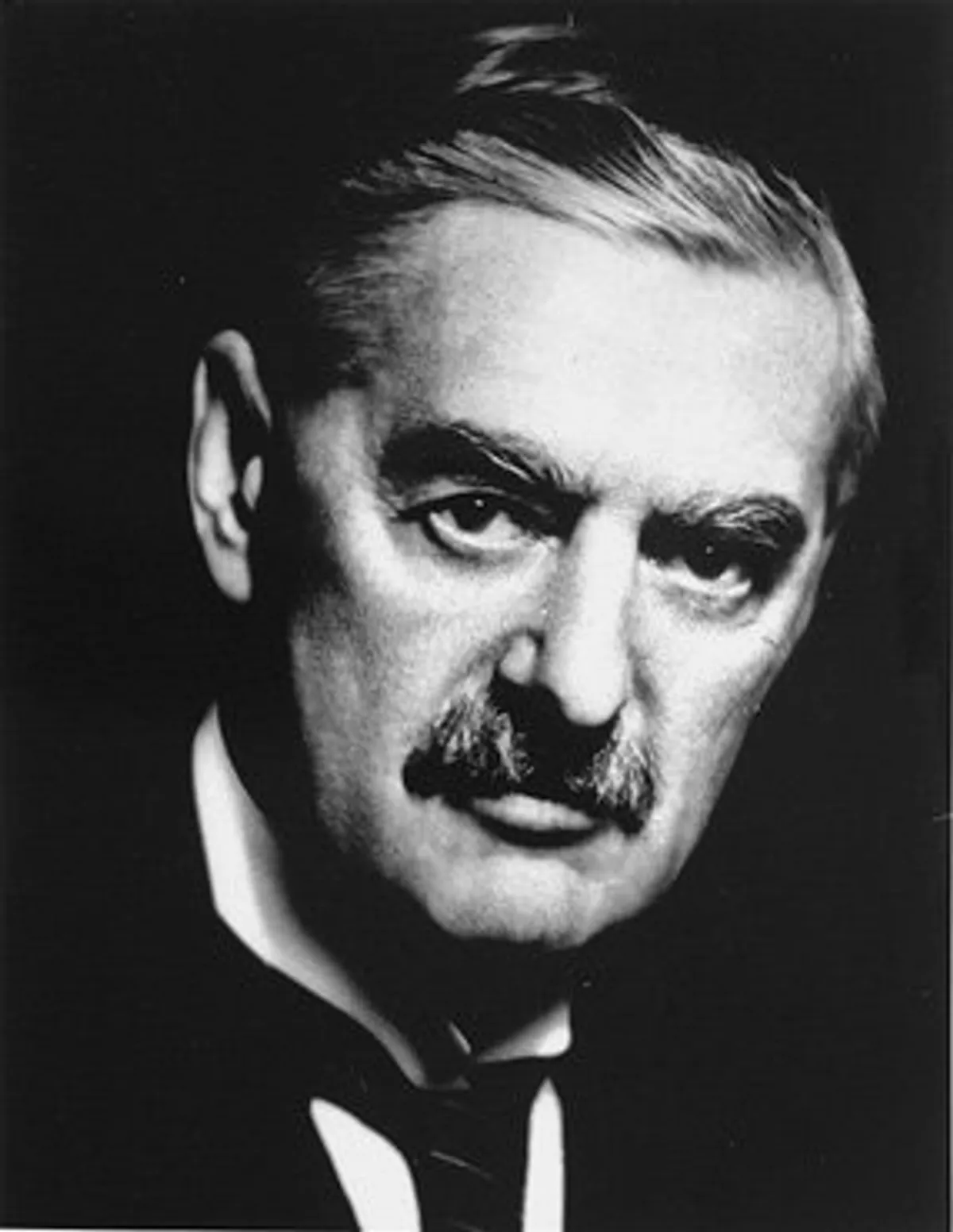
That was the final outcome of a fascinating debate held at the Royal Geographical Society in London and organised by Intelligence Squared more than a decade ago. The motion, “Neville Chamberlain did the right thing”, was proposed by Professor John Charmley and seconded by Professor Glynn Stone. Speaking against the motion were Sir Richard Evans, author of the best book I have read about the Third Reich, and Piers Brendon, former keeper of the Churchill Archive Centre. Pulitzer Prize winner Anne Applebaum was in the chair.
I believe the debate is still available to watch on YouTube.
Appeasement and The Blue Pencil
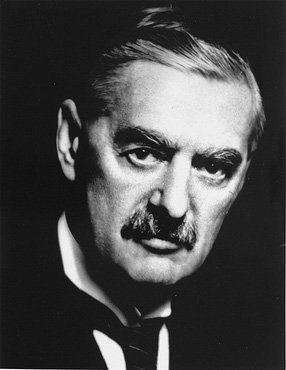
The proceedings were of special interest to me because appeasement in the 1930s formed the background to my political thriller The Blue Pencil, which was published by Sacristy Press in November 2012.
Although all four speakers acknowledged that appeasement of the European dictators Hitler and Mussolini continued during the early stages of the war, the main period of focus, both in the debate and in my mind, stretched from the remilitarisation of the Rhineland in March 1936 to the signing of the Munich Treaty in September 1938.
Stanley Baldwin was Prime Minister when the Germans marched into the Rhineland, but it was as much, if not more, the supine response of the French that encouraged Hitler to seize Austria two years later.
The Case for Chamberlain
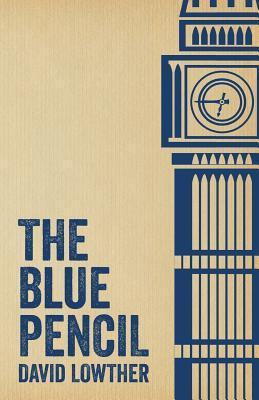
John Charmley, proposing the motion, suggested that Chamberlain was pursuing normal British foreign policy, which stretched back to the Crimean War in the mid-19th century and was interrupted only by the First World War. In the half century preceding 1914, Britain’s chief overseas adventures had been mostly colonial. Professor Charmley argued that the horrors of the 1914-1918 conflict reinforced the need for appeasement, and that this approach had strong public support.
In his passionate speech, Professor Charmley also pointed out that, following the economic slump of the 1930s, Britain could not afford another war. Nor were we militarily prepared for it. The trauma of the First World War was still felt throughout the country, and the public and the vast majority of the House of Commons were fully behind the government’s effort to appease the dictators.
He did give some credit to Chamberlain for encouraging the development of the RAF but, paradoxically, failed to mention that the Prime Minister’s neglect of the army contributed to the humiliation of Dunkirk. Appeasement, he concluded, was the only policy, and Chamberlain had made an honourable attempt to see if peace was possible.
The Case Against
Sir Richard Evans, opposing the motion, said that when Chamberlain became Prime Minister in May 1937, he was warned by the British ambassador in Berlin, Sir Eric Phipps, that the Nazis did not behave like normal statesmen. Chamberlain also had information from the Secret Service that Hitler’s territorial ambitions knew no limit.
He could also have added that Winston Churchill, who had his own spy network, had warned Parliament of the Nazi threat as early as 1932, before Hitler came to power. Chamberlain mistook Hitler for a normal European statesman and believed that he could deal with him. He quickly replaced Phipps in Berlin with fellow traveller Sir Neville Henderson.
Britain and France had stood by while Germany marched into the Rhineland, in direct contravention of the Treaty of Versailles, and did nothing when Austria was incorporated into the Third Reich in March 1938, another Versailles provision Hitler chose to ignore. Hitler’s triumph in Munich, when Britain and France signed away parts of Czechoslovakia to the Nazis, encouraged him to accelerate his plans for war, Sir Richard claimed.
In his summary, Sir Richard said that appeasement was a desperate search for peace at any price, and that Munich gave Great Britain and France the chance to stop Hitler while it was still possible to do so. There was opposition to the Fuhrer’s warlike ambitions among the German general staff and, had Hitler been humiliated at Munich, the army may well have deposed him.
Chamberlain returned from Munich in triumph, leaving Europe to sort out its own problems. His signature, and that of the French Premier Daladier, led to the destruction of Czechoslovakia and Poland over the next twelve months.
Could Britain Have Chosen Differently?
Professor Stone, speaking for the motion, believed that the alternative to appeasement was war with Great Britain as part of a grand alliance, possibly involving the USA and the Soviet Union as well as our traditional ally, France. He argued that the USA would not join such an alliance, having recently passed its Neutrality Act; that the USSR was weakened by Stalin’s purges; and that France was feeble after years of political instability. This left Chamberlain with only one option.
Piers Brendon completed the presentations, supporting Sir Richard and opposing the motion. He described Chamberlain as smug, vain and fundamentally naive. His fear of communism led him to snub the Soviet Union and court Mussolini instead. He removed opposition to him, both in the Civil Service and the Cabinet, and appointed yes men in their place.
At this stage Anne Applebaum announced the results of the pre-debate poll, which showed that those against the motion were likely to score a comfortable victory, although 34% were don’t knows. Questions and comments from the floor followed, and the evening ended with another poll. The anti-appeasers were still in the clear, but the proposers had persuaded a substantial number of the don’t knows to vote for them, leaving the anti-appeasers ahead by only 8% of the total audience.
Writing Without Hindsight
In The Blue Pencil, I tried desperately not to take sides in this great debate. I also tried to write the novel without hindsight, with just one exception. I painted Chamberlain as a caring and energetic Health Minister and Chancellor of the Exchequer who recognised the need to improve Britain’s health services, housing and schools, and who preferred to spend money on those priorities rather than war.
Ultimately, I came down on the side of the anti-appeasers. I believe Britain and France should have stood up to Hitler at Munich. Sir Richard told us that the German general staff felt the Wehrmacht was unprepared for war and may well have tried to get rid of Hitler had he gone to war over Czechoslovakia.
We have evidence of this from sources inside the German Embassy in the UK who, as Sir Richard revealed, communicated all kinds of information to Klop Ustinov, former press officer at the embassy and father of Sir Peter Ustinov. Ustinov in turn passed this information to the Foreign Office. It is inconceivable that Chamberlain was unaware of this.
The Military Balance in 1938
I also made the case that the military situation in the autumn of 1938 would not necessarily have favoured Hitler. Sir Richard made the same point in his presentation, making special mention of the strength of the Czech army.
Add to that the natural defence provided by the mountains of the Czech western border, the strongest fortifications in Europe, and one of the world’s biggest armament factories in the Skoda Works at Pilsen. It is easy to see that Czechoslovakia would not have been an easy nut to crack.
Professor Stone’s argument about the difficulties of forming a grand alliance does not stack up. The Czechs were already allied to France, which in turn was allied to the Soviet Union as well as Great Britain. Had Hitler attacked Czechoslovakia in the autumn of 1938 and these alliances been activated, he would have faced the formidable Czech forces, probably supported by Soviet air power, on his eastern front, and the Anglo-French army in the west.
That would probably have stopped Hitler. He had no allies at all. The Second World War, which cost 55 million lives, could have been avoided.
Chamberlain, however, knew better.
After Munich
I remember seeing a piece of 1930s newsreel film in which Chamberlain was leaning back in his chair and boasting of his success as Chancellor of the Exchequer in ending the slump of the early 1930s, cheerfully ignoring the fact that recovery was, at that time, confined to South East England and the West Midlands. The rest of the country was still living in poverty.
Chamberlain’s foreign policy was dictated by his hatred of communism. His lack of experience in foreign affairs and his inevitable belief in his own infallibility led eventually to his downfall. He was a vain, naive and arrogant man who led us into war.
The Munich crisis, the high point of appeasement, is still talked about today. There are still plenty of people who feel that Chamberlain was right to accept Hitler’s promise that he had no further territorial claims to make in Europe. Chamberlain returned from Munich with an agreement to this effect, and yet less than a year later the Germans marched into Poland.
A little over a month after the signing of the Munich Treaty, the German Nazi Party orchestrated a pogrom aimed at its Jewish citizens. Many buildings were destroyed, hundreds of Jewish people were imprisoned, and further sanctions were added to those already on the German statute book since 1933. This was Kristallnacht, and Chamberlain recognised that all his efforts to keep Hitler in line had failed.
At that point, in November 1938, the government began to prepare for war. Essentially this meant an aircraft building programme, while the army remained neglected. The effect was defeat at Dunkirk, but victory in the Battle of Britain.
Poland and the Road to War
In The Blue Pencil, I drew the narrative to a close at the end of March 1939. Chamberlain had at last recognised that Hitler was not to be stopped. He made one last vain attempt by promising Poland, then the latest country on Hitler’s shopping list, that Britain would guarantee its independence.
Chamberlain felt that this would stop Hitler’s further aggrandisement by forcing him to pull back from his threats to Poland. As we now know, it had no effect whatsoever. Hitler sent his troops into Poland on 1 September 1939.
Further Reading
The Blue Pencil is available in paperback and as an ebook. You can buy the paperback version from the publisher Sacristy Press as well as from Amazon.